Gut-Healing Chicken Bone Broth (Slow Cooker Recipe)
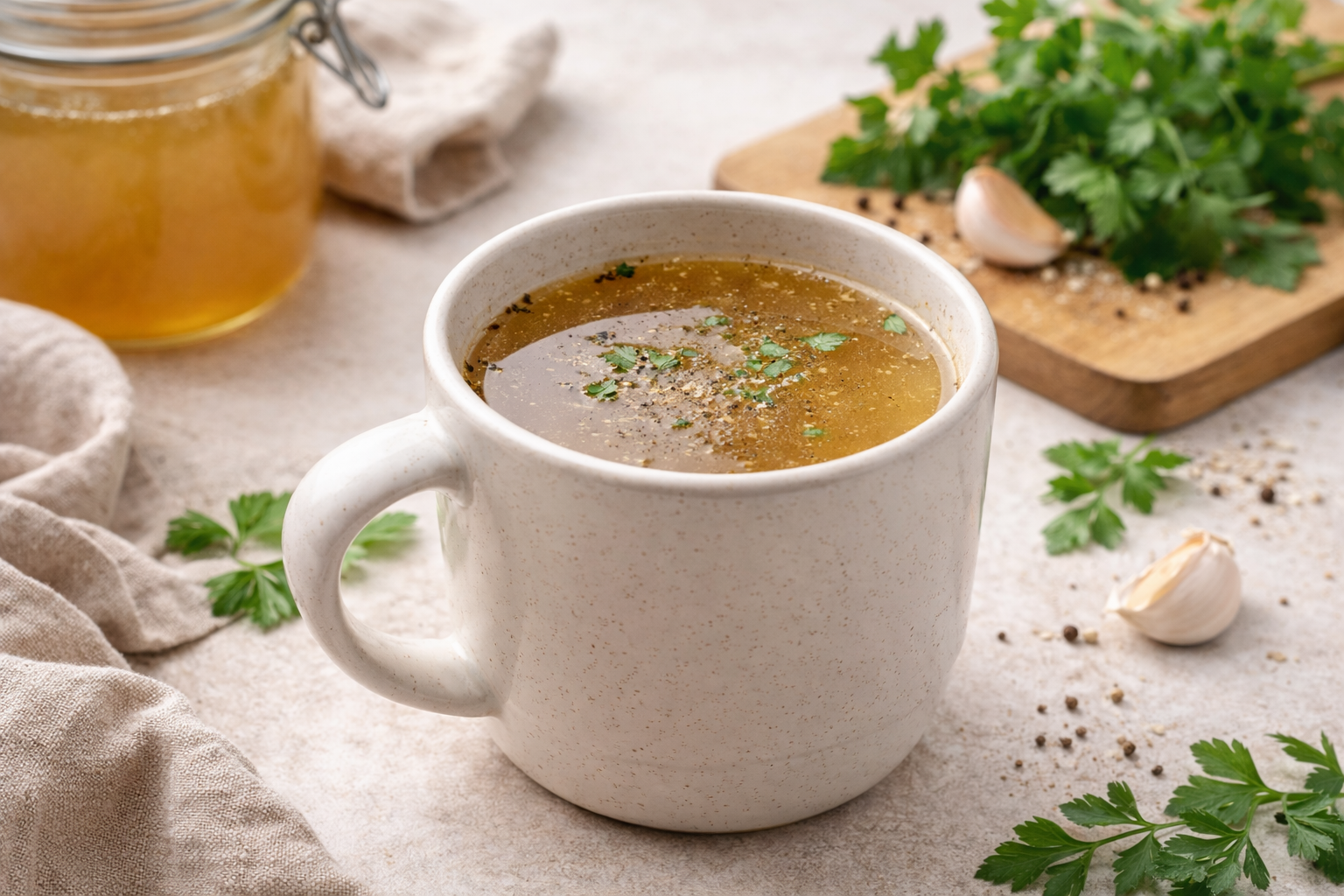
If your digestion feels delicate, reactive, or simply worn down, this is a calm place to start.
Chicken bone broth is one of the most gently supportive foods for gut health. It’s warm, mineral-rich, easy to digest, and deeply practical — especially when energy is low or symptoms are flaring.
This isn’t about doing something impressive.
It’s about making something steady your body can rely on.
Why chicken bone broth supports gut health
Bone broth is often helpful for a “leaky gut” or irritated digestive system because it provides the raw materials the gut lining needs to repair and strengthen itself.
During slow cooking, collagen and gelatin are released from the bones, along with amino acids such as glutamine and glycine. These nutrients help nourish the intestinal lining and support its natural repair processes, which can be particularly helpful when inflammation or increased gut permeability is present.
Because bone broth is liquid, warm, and very easy to digest, it’s usually well tolerated when digestion feels fragile. Many people notice less bloating and discomfort simply because it places very little demand on the digestive system while still offering nourishment.
It’s not a cure.
But it can be a gentle, steady support while the gut is doing its healing work.
Bone broth is now widely available in supermarkets and health food shops, and for many people it’s a genuinely helpful, convenient option. My family and I use shop-bought broth ourselves at times — including Freja — especially when life is busy.
That said, making your own bone broth takes surprisingly little effort, particularly if you use a slow cooker.
Gut-Healing Chicken Bone Broth Recipe
Makes: approximately 12 servings
Prep time: 5 minutes
Cook time: 12 hours (slow cooker)
Best for: gut support, batch cooking, freezer stock
Ingredients
1 whole chicken or the carcass of a roasted chicken
2 bay leaves
1 tbsp black peppercorns
½ cup apple cider vinegar (120ml)
250ml filtered water (or enough to cover the carcass)
1 sprig of fresh rosemary
(or ¼–½ tsp dried rosemary)1 sprig of fresh thyme
(or ¼ tsp dried thyme)(optional) 1 clove of garlic, lightly crushed
(or ¼ tsp garlic powder)(optional) 1 cooking onion
The apple cider vinegar helps draw minerals out of the bones during cooking. You won’t taste it in the finished broth.
Method
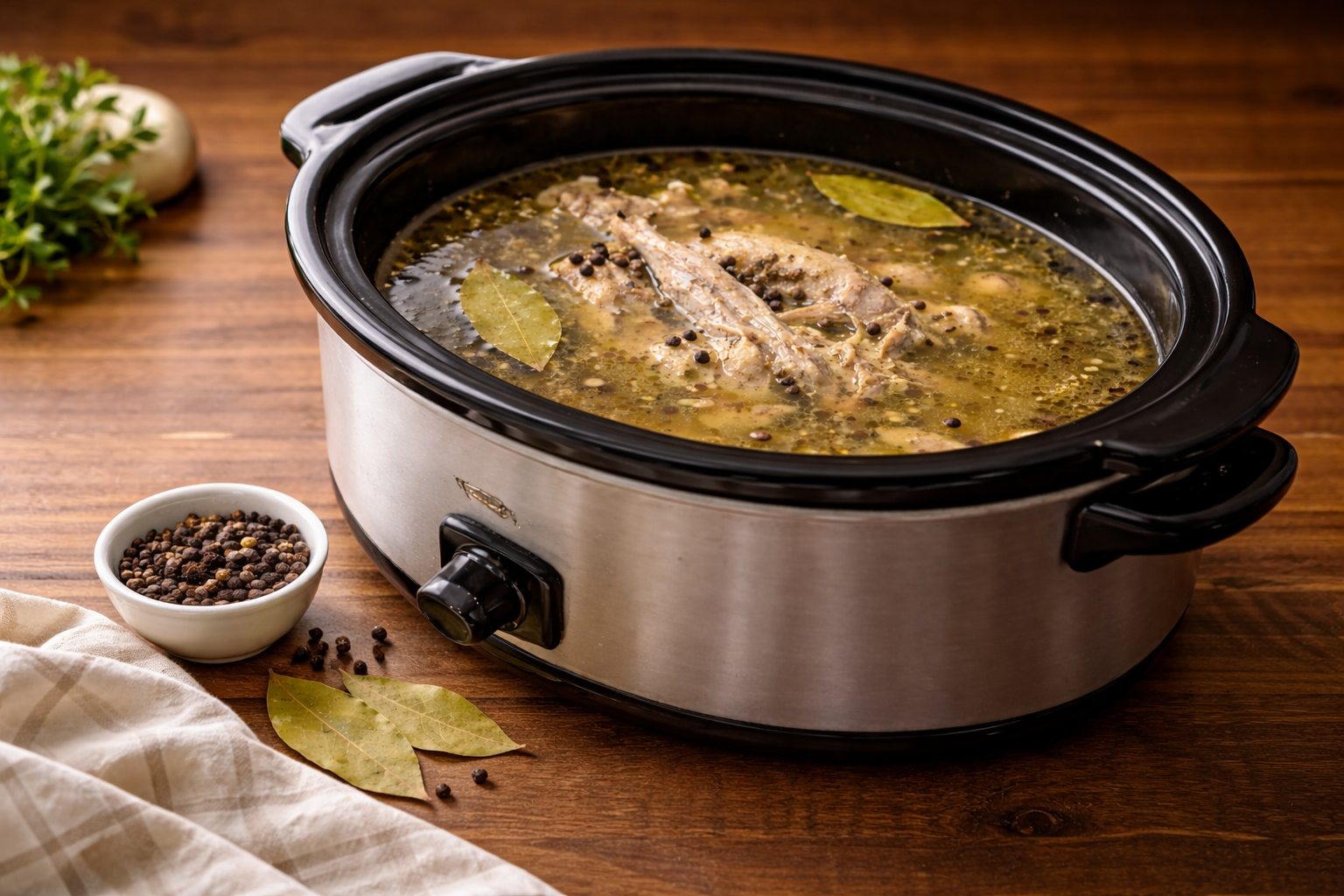
Place the whole chicken or chicken carcass into your slow cooker.
Add the bay leaves, black peppercorns, and apple cider vinegar.
Optionally, add in the garlic and onion. Cut the onion into quarters and leave the skin on
Pour over the filtered water, ensuring the chicken is fully covered.
Cook on low for 12 hours. About half an hour before the broth is finished add in the rosemary and thyme.
Strain the broth through a fine sieve. Use a funnel to decant into bottles, mason jars - whatever container you wish!
If there is usable meat left on the bones, shred and reserve it for another meal.
No complicated steps. No hovering over the stove.
How to use chicken bone broth
You can use this broth in whatever way feels most manageable:
Drink a mug warm between meals. Just add a little salt to taste
Use it as a base for soups, stews, or curries
Cook rice or quinoa in it for extra nourishment
Add it to meals when appetite or digestion is low
If the broth turns jelly-like in the fridge, that’s a good sign. It means it’s rich in gelatin.
Storage
Fridge: keeps for up to 1 week
Freezer: freezes very well in portions
Freezing in small jars or silicone moulds makes it easy to defrost only what you need. Over time, your freezer becomes a quiet form of self-care — supportive food ready when you don’t have the energy to cook.
If you’d like more practical support with gut health, you can subscribe for future posts — or book a free discovery call below.